Earth & Seas אֶרֶץ · יַמִּים
The Bible’s longest-running picture is born
On day three the waters are gathered and dry land appears. Dry ground on one side, sea on the other, and God names them both. The prophets never let that picture go. In vision after vision, the sea is where the nations rage and rise, and the land is where God’s people live.
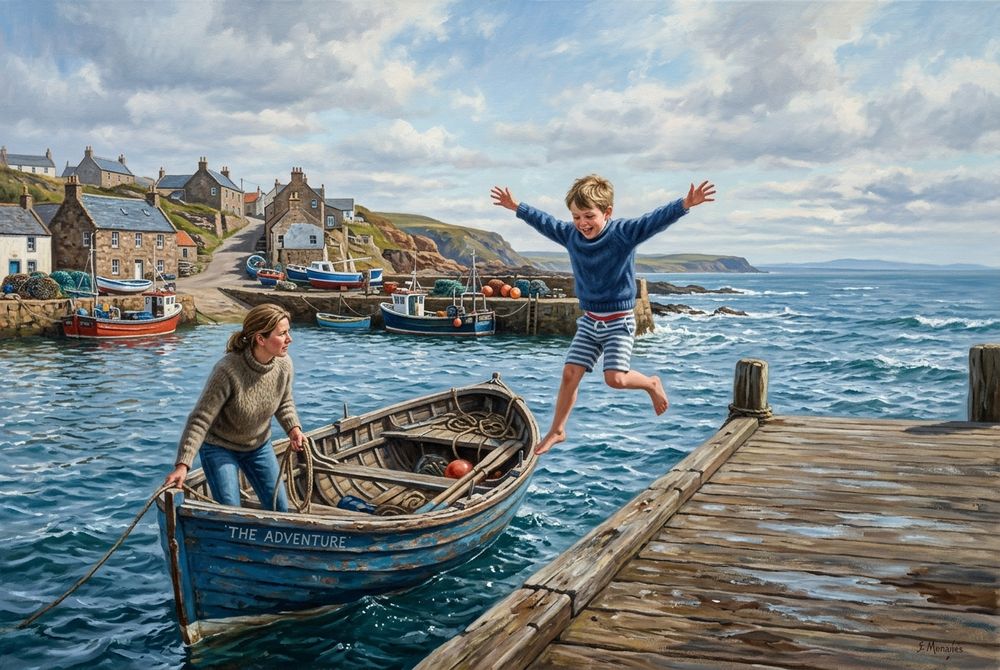
Ask a sailor’s child what land means. Solid footing, home. The sea is vast, restless, and not yours. The Bible speaks this language fluently, and it speaks it often.
The text decodes itself, twice
Daniel sees beasts rise from the sea, and the interpreting angel says what they are: kings. The angel also says they arise “out of the earth.” The vision speaks picture-language at both ends: the sea for the churning nations they rise from, the earth for the world they rule. The sea births empires.
Revelation says it outright: the waters are peoples and nations. No guesswork required.
And when Isaiah retells the exodus, he tells it as a day-three act: sea driven back, dry ground, a people brought through onto the land. Israel’s birth is narrated as land-out-of-sea.
If oceans are just oceans, “no more sea” is strange news. If the sea is the old division of the peoples, it is the best news there is.
Earth & Seas hold Day 3’s corner of the night sky, beside the seed.
Open the heavens →Day three describes God separating the oceans from the continents, and the prophets' sea-and-land pictures are later poetry, not the meaning of Genesis.
Day three lays down the Bible's most durable picture, sea for the nations and land for God's people, and the prophets read it that way.
The word erets can mean the whole earth, a land, or bare ground. Only context decides, every single time, and the vocabulary alone settles nothing. Day three does not secretly say “Israel.” This page shows the picture the rest of the Bible builds from day three’s materials. Whether Genesis planted it on purpose is the question to sit with.