Abad & Shamar עָבַד · שָׁמַר
A job description, in two verbs
Adam is put into the garden “to dress it and to keep it.” Those are two ordinary verbs: abad, serve or work, and shamar, keep or guard. On its own, either one could describe a farmhand. The Bible also uses them together, about a holy place, and that is where this page goes.
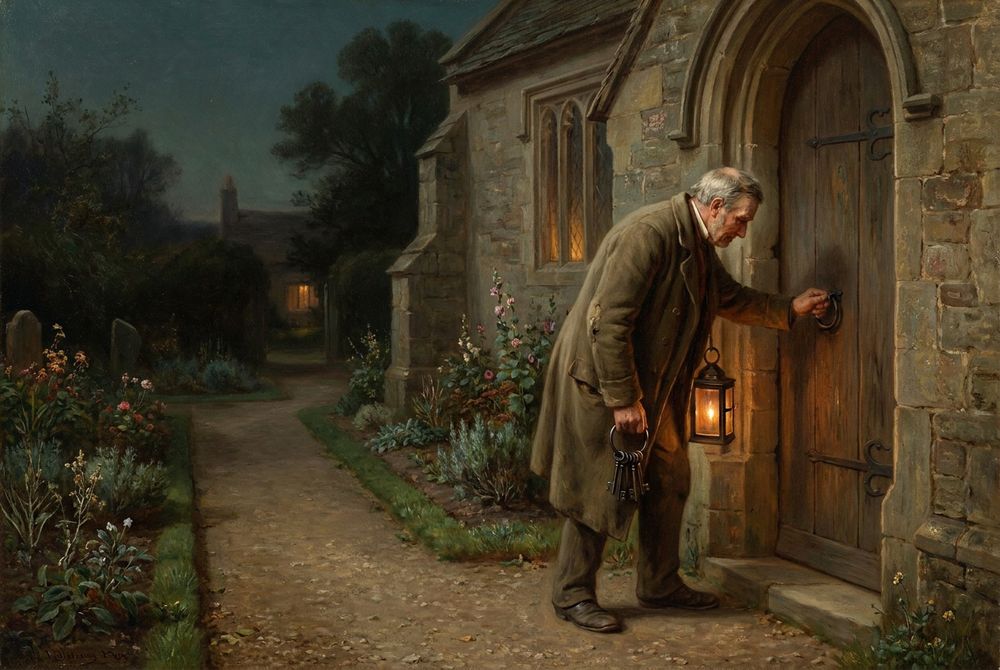
He tends the grounds by day and locks the doors at night. One man, two duties: care and guard. Every church, every palace, every treasury has someone whose job is exactly these two verbs.
The pair, in its other home
Numbers 3 is the Levites’ job description at God’s tent, and it uses Adam’s two verbs, side by side. Numbers 18:5–7 keeps the pair for the priests’ charge. In the books of Moses, serve-and-guard at a holy place is priests’ work.
The second verb turns up again one chapter later. When the man is driven out, the keeping does not stop. It changes hands. The cherubim now shamar the way, the very task the man was given and dropped. A guard implies something to guard against, and chapter 3 shows what came in.
The gardener, and the servants
On the first morning of the new creation, Mary mistakes the risen Jesus for the gardener. John lets the mistake stand. It is true in a way she does not know yet.
The story ends the way Eden started: servants serving in the sanctuary-city, on the last page of Revelation. The old garden job, abad and shamar, is handed back.
Serve-and-guard is a bright star of the sunrise sky, joined to the trees it was set to keep.
Open this scene’s sky →"Dress" and "keep" describe a gardener's work: God gave Adam the garden to farm and look after, and work was good before the fall.
"Dress" and "keep" (abad and shamar) are the pair Moses uses for the Levites' tabernacle duty, so Adam's charge is priestly service and guard duty.
Each verb alone is common and secular. Farmers abad fields and shepherds shamar flocks. The argument here is from the pair and the setting, not from either word. On the most common reading, the Hebrew verbs point at the garden itself (“serve it, guard it”). The suffixes are debated, so nothing here is built on them. Either way, “worship and obey” is more than the words say. The claim is a priestly vocation, shown by where the pair lives.