Bara בָּרָא
Start with something you already know
What do a marriage, a company, and a pickup team have in common? They are completely real, and you can't touch any of them. Each one is relational, and each has its own culture. Each runs on agreements: vows, bylaws, rules of the game. And each one begins at a moment, when the agreement is made.

Made by vows. Two people stand up, words are spoken, and something new and real exists: a covenant you could never put in a wheelbarrow.
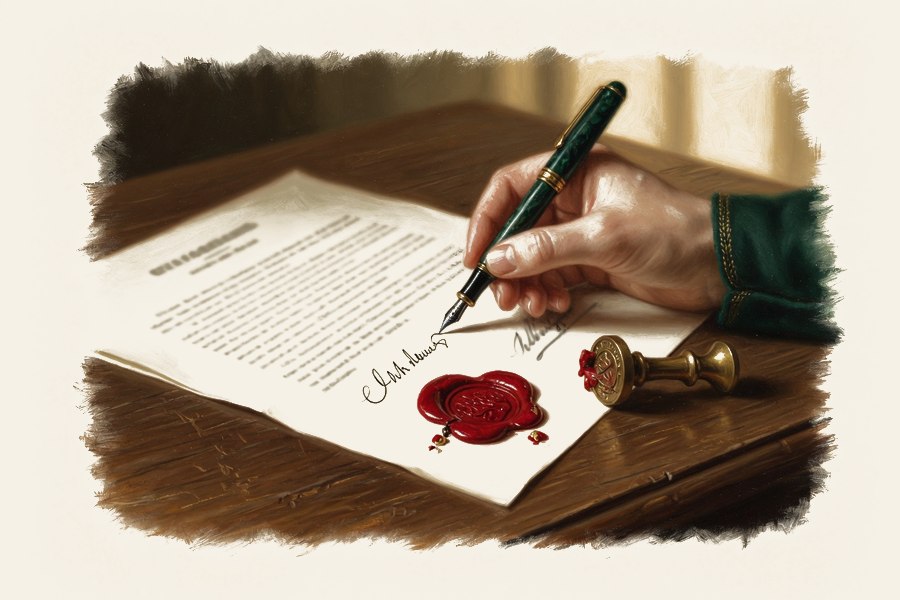
Founded when the papers are filed. A signature, a seal, and a real thing is born, with its own name, culture, and rules.

Real the moment sides are chosen. Nobody signs anything. The game itself supplies the rules everyone plays by.
Bara makes things like these. When the Bible says God "creates," it is very often this kind of making: God bringing a real, ordered, relational world into being. A people, an agreement, a dwelling. Follow the word across all of Scripture, then come back to Genesis 1:1 and read it fresh.
A rare verb, small enough to count
Bara is rare: fifty-four uses in the whole Hebrew Bible. That is a set small enough to inspect every single one, and the sky above holds them all. Its subject is always God; no man ever bara’s anything. And the count has a surprise in it. Isaiah uses this verb more than Genesis does, seventeen times to eight. So what Isaiah founds with it matters.
A people, created. Jacob had a birthday like any man, but Israel was founded, at a mountain, by words. Isaiah says God bara’d them, and pairs it with yatsar, formed, which is Genesis 2’s own potter-verb. The Bible’s making-verbs are spent here on making a covenant people. And not only a past one:
A people not yet born, already scheduled to be created. And Malachi’s “created us” stands inside a sentence about brothers and a profaned covenant. It is his grammar for we belong to one house.
The keystone: Isaiah says it out loud
Same verb, three words apart. Verse 17 creates new heavens and a new earth. Verse 18 says what that is: Jerusalem, and her people, made a joy. Isaiah defines the phrase in his very next breath. And when he wants to say what creating is for, he says “formed it to be inhabited” (Isaiah 45:18). If bara founds that, then what Genesis 1:1 founds is an open question, and the heavens and the earth takes it up.
The founding verb, still founding
When Genesis was translated into Greek, long before Jesus, bara became ktizo, the verb Paul uses below to make the one new man. Its noun form, ktisis, is what Paul calls anyone in Christ: a new creation.
The founding verb still founds. Paul isn’t just quoting an old word. He’s saying God is doing the founding thing again, out of two, and calling the whole thing new.
Every place Scripture uses this word, set in the night sky of Genesis 1: the first lit constellation, its lines reaching across the whole heavens. Rest on a star and its verse opens beside it.
Open the heavens →"Created" means God made the physical universe out of nothing, and Genesis 1:1 is the verse that teaches it.
"Created" (bara) most often means God founding an ordered, relational world, a people, and Genesis 1:1 is founding God's house.
This page proves bara doesn't have to mean making the physical world from nothing. It does not, by itself, prove Genesis 1 is covenantal. That case needs the sanctuary evidence too: keep going. The count cuts both ways. Genesis 1:21 spends this verb on sea creatures and birds, and 1:27 on the man. Material-sounding uses exist, and they stay in the sky with all the rest. Bara can make things. This page shows what Scripture most often founds with it, and asks what Genesis 1:1’s object is. God did create the material universe. The question is whether this verse is the one that teaches it.