Light & Darkness אוֹר · חֹשֶׁךְ
Start with a question the chapter asks itself
Something odd sits on the first page of the Bible. Light is made on day one. The sun is not made until day four. Light lives three days with no lamp to carry it. If this chapter is a report on how sunshine started, that is a problem. The rest of the Bible uses light and darkness in a way that may solve it.
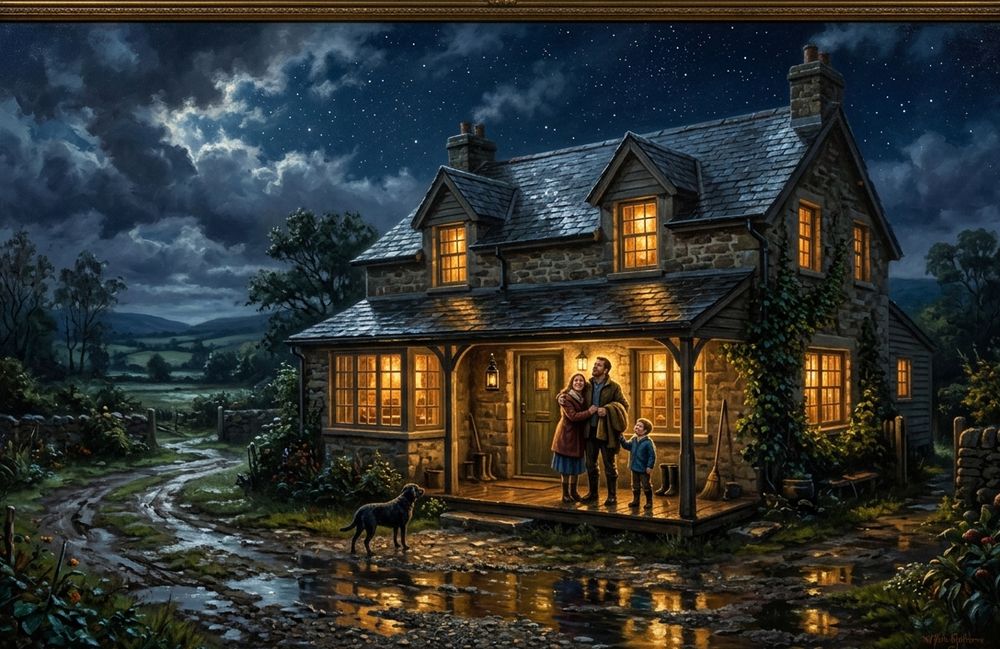
A storm takes the power out. The house sits dark. Then the hum returns, the windows warm, the porch lights come on down the road. Nothing new was built, but order came back, and fear went out. In the Bible, light is that kind of word.
Isaiah reads Day One out loud
The Bible’s three great making-verbs stand in this one line: form (Genesis 2’s own verb), create and make (Genesis 1’s). Isaiah’s pairs are the thing to see. Light sits where peace (shalom) sits. Darkness sits where trouble sits. Isaiah is reading day one’s two words in the key they belong to. Light goes with things whole and working; darkness goes with a world coming apart.
The old word “evil” can throw a modern reader. The Hebrew is ra’: harm, calamity, disaster, the ruin that falls on a nation. Isaiah’s own pairing shows it. Light is matched with shalom, peace in the sense of wellbeing, everything whole. So darkness is matched with the opposite of wellbeing, which is ruin. Isaiah is saying that no rival god stands behind a nation’s good days or its ruin; the LORD alone does. He is not saying God makes people do wrong.
Prophets after Isaiah keep the pairing. Amos speaks to people who were looking forward to the day of the LORD and tells them “the day of the LORD is darkness, and not light” (Amos 5:18). No eclipse required. He is telling them what kind of day they are actually standing in.
First, the thing Genesis 1 does not say
Go looking in Genesis 1 for the darkness getting blamed and you will not find it. Verse 2 says “darkness was upon the face of the deep,” and that is the whole report. Nobody is at fault, and nothing has gone wrong. Then God speaks, and “God saw the light, that it was good: and God divided the light from the darkness” (Genesis 1:4). He hands each one a name: Day, and Night (Genesis 1:5). Giving a thing a name and a border is not the same as condemning it.
The page next door makes the same point about the other words in verse 2: before, not broken (see tohu wa-bohu). The dark of verse 2 is before, not bad. The dividing itself is a word with a job of its own, and that job is walked out on hivdil. Keep that line in place. What the rest of the Bible does with darkness is a later move. It reads best as a move, not as something carried back into verse 2.
GO DEEPER: WHAT DARKNESS COMES TO MEAN
What the rest of the Bible does with darkness
Later writers pick the word up and use it for people. What they mean by it matters, because it is easy to hear a threat where there isn’t one. Start with the simplest sentence about God in the New Testament.
Light is not one of God’s moods. It is what he is, with not a drop of dark mixed in. So what is the dark in a book like that? John does not leave us guessing. A few lines later he defines it in one sentence.
Walking in darkness is not sitting in an unlit room. It is hating your brother. John wrote that definition himself, in his own letter, and it carries to the other places the word gets used this way. Darkness is a life with the love left out.
The Old Testament had already drawn the same picture. “The way of the wicked is as darkness: they know not at what they stumble” (Proverbs 4:19). A man in the dark does not know what he is tripping over, or who. The Psalms take it one step further: “Man that is in honour, and understandeth not, is like the beasts that perish” (Psalm 49:20). Take the light away and a man does not stop being strong. He stops being human about it. Might makes right, and people live more like animals than like human beings.
That is the frame, and it matters more than any single verse on this page. Darkness is not a punishment God throws at people. It is what a world is like when it will not have the light. No love and no goodness are in it, the strong do as they please, and everybody stumbles over people they never meant to hurt.
Then the light comes up on people sitting in the dark
Isaiah says it in one of the most quoted lines in the Bible. He is not talking about weather.
Those are day one’s exact two words, or for light and choshek for darkness, laid over a nation living the way just described. Isaiah does not say God finally turned a lamp on. He says the light came to them. Then the New Testament takes this verse to announce Jesus starting to preach in Galilee.
One word shifts. In Isaiah the people walked in darkness. In Matthew they sat in it: settled in, not going anywhere, not expecting anything. The gospel chooses that picture for the moment Jesus arrives. It is not a courtroom but a sunrise, over people who had stopped looking for one.
Paul aims day one at the heart
Paul quotes day one and aims it at hearts. For Paul, the first word of creation is the word of covenant knowledge: God making himself known where it was dark.
The last page: no more night
Remember the odd thing this page started with. Day one’s light was spoken three days before there was a sun to carry it. The Bible’s last page describes the city the same way.
Light with no sun to carry it is day one’s own arrangement, showing up again at the other end of the book. But something day one still had is gone here: the night. Genesis 1 gave the dark a name and a border. This page has no border to draw, because there is no dark left to bound. If darkness has been naming a world with the love left out, then “no night there” is not an astronomy report. It is a promise about what kind of people live in that city.
That scene has its own walk on this site: the last Adam, the garden at dawn, a morning with no evening coming. When that is true, and how much of it is true already, is your question to weigh. This page only shows that the Bible’s last chapter goes back to its first one and takes the night out.
Isaiah 45:7 hangs in the night sky of Genesis 1: one star shared by two figures, the Staff of Bara and this word’s own light.
Open the heavens →"Light" is physical light, called into being by God's word on the first day, three days before he made the sun to carry it.
"Light" arrives before any sun because the chapter is about order, wellbeing, and God making himself known, as Isaiah and Paul use the word.
On Genesis 1 itself. This chapter never condemns the darkness. It names it and bounds it: “God divided the light from the darkness” (Genesis 1:4), and each one is given a name (Genesis 1:5). That dividing verb has its own page, hivdil. A reader who says “verse 2 is simply dark water before the first word” is reading it correctly. This site reads it the same way: before, not broken, as tohu wa-bohu argues next door. The moral use of darkness, a life with the love left out, is later Scripture’s own development. This page shows the verses where that development happens rather than reading it back into verse 2.
On Isaiah 45:7. It sits in a speech about Cyrus and the fall of Babylon, and its first point is that God rules history’s outcomes. Taking ra’ as calamity or ruin rather than moral evil is ordinary lexicon ground, not a move invented for this page. The pairing in Isaiah’s own line, peace on one side and ruin on the other, is the check. This site reads the verse as strong evidence for the key day one is written in, not as a knock-down proof.
On the verses that quote each other. Matthew 4:16 is not word-for-word Isaiah 9:2; Isaiah’s people walk in the dark, and Matthew’s sit in it. The point is what each verse says, not a quotation matched syllable for syllable. Revelation 22:5 is read several ways by careful people, and this page settles nothing about when. God made the literal light too. The question is what this chapter is teaching, and light shining three days before any lamp exists is the chapter’s own hint.