Hivdil הִבְדִּיל
The chapter’s working tool
Genesis 1 is built by dividing: light from darkness, waters from waters, day from night. Count the verbs and hivdil comes out as the chapter’s working tool. So it matters a great deal where else the Bible puts this exact verb.
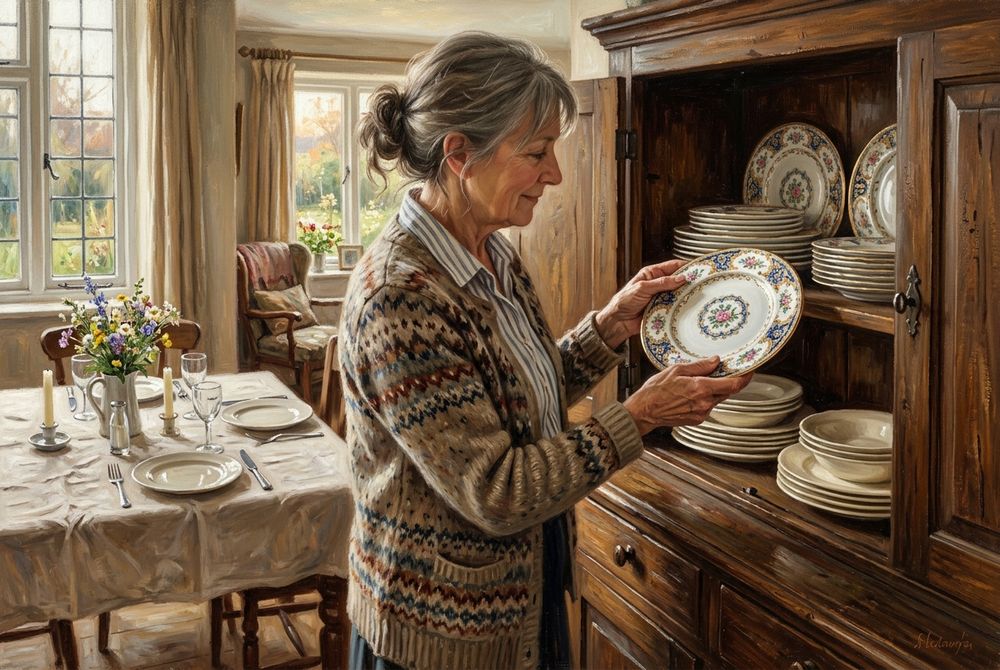
Same clay as the everyday dishes. What makes it special? It was set apart for guests, for feasts, for the days that matter. Hivdil works the same way: not better stuff, appointed stuff.
The verb at work
The verb that divides light from darkness is the verb God uses to make a people his own.
Sorting the holy from the common was the priests’ job description.
Divisions inside divisions
The dividing doesn’t stop at one line. God sets Israel apart from the peoples. Then, inside Israel, he sets one tribe apart from the rest, with this same verb.
The Levites are cut out of Israel the way Israel was cut out of the nations, with the same word. The ring is one size smaller.
And the sanctuary those Levites served is built around one more hivdil.
The only hivdil in the book of Exodus is the temple veil. The dividing verb builds sanctuaries.
So set-apartness comes in rings: the nations, then Israel, then the Levites, then one man, once a year, past the veil. Each ring is for the ones outside it. The priests served the people, and the people were to serve the nations.
One verb divides the light, the waters, and the day. The same verb divides the veil, the priests, the clean, and the people. Again and again in the Bible’s own usage, hivdil is how holy places and holy peoples get made.
The wall the divider brought down
Hivdil very often divided for holiness. Priests split clean from unclean, and the veil split the holy place from the most holy, so a people could live near the Presence. The dividing did its work for a very long time.
Then Paul writes the day it stopped. The wall is down, and one new man is made of two in the very next verse (see the founding verb, still founding). The dividing verb built the fence. The Divider tore it down.
What happens to the rings
With the wall down, the rings start to move.
Peter is looking at a sheet full of unclean animals when he hears that. Then he walks into a Roman’s house and says out loud what he worked out.
Peter doesn’t say any food. He says any man. He reads the clean-and-unclean line as a line drawn about peoples, and he says God himself has ended it. (The same sheet is read for day five’s creatures on birds and fish.)
Then the innermost ring turns inside out.
Those are the Levites’ words: chosen, holy, God’s own possession. Now they are written over a whole believing people, not one tribe inside one nation. A royal priesthood is what people were made to be in the first place. They stand in for God over his world (see the image), and they serve and guard his holy place (see abad and shamar). The verse ends out of darkness and into light. Day one’s own divide is in that line, with people carried across it.
The dividing verb drew rings, and it drew them for the people outside them. When the wall came down, the innermost ring, the priestly one, is the ring that opened.
GO DEEPER: THE SET-APART ONES SHINE
One more thread, held up rather than pulled.
Daniel puts the wise in the firmament (see raqia). Paul writes it in the present tense over a church. What Daniel’s verse settles, and when, is a real question, and this page leaves it open. The picture, though, is one picture: the set-apart ones do what stars do. They shine where it is dark, and they are seen a long way off.
The Scales of Hivdil are drawn in the night sky: five stars, every one a place this verb does covenant work.
Open the heavens →"Divided" describes God physically separating light from darkness in the newly made world, the first step in ordering the cosmos.
"Divided" (hivdil) is the verb Moses uses for setting the holy apart from the common, so day one draws the first line in God's house.
Most commentaries read Genesis 1’s dividing as ordinary cosmic sorting, with the priestly echo as coloring rather than the point. This page shows a pattern, not a proof. Most of the other hivdil texts in the books of Moses do covenant work: veil, priests, clean and unclean, Israel from the nations. A few cut against the pattern; Leviticus 1:17 uses the verb for butchering a bird. Whether Genesis 1 speaks the priestly dialect is the question this whole site asks. Weigh this page with the rest of the evidence, not alone.
Three limits on the second half of this page. “Divisions inside divisions” is this site’s summary, not a phrase Scripture uses. Hivdil is an ordinary verb as well as a priestly one. It divides waters from waters and light from darkness, and nothing in those lines is priestly on its face. Whether every food-law division was drawn about peoples is debated, and careful readers say no. Acts 10 shows it was at least about that, in Peter’s own words.