Cherubim כְּרֻבִים
The guards take the post
The last verse of the Eden story posts guards: cherubim, at the east, with a sword of flame, “to keep the way of the tree of life.” The Bible is in no hurry to explain what cherubim are. It cares much more about what they do, and where else they stand.
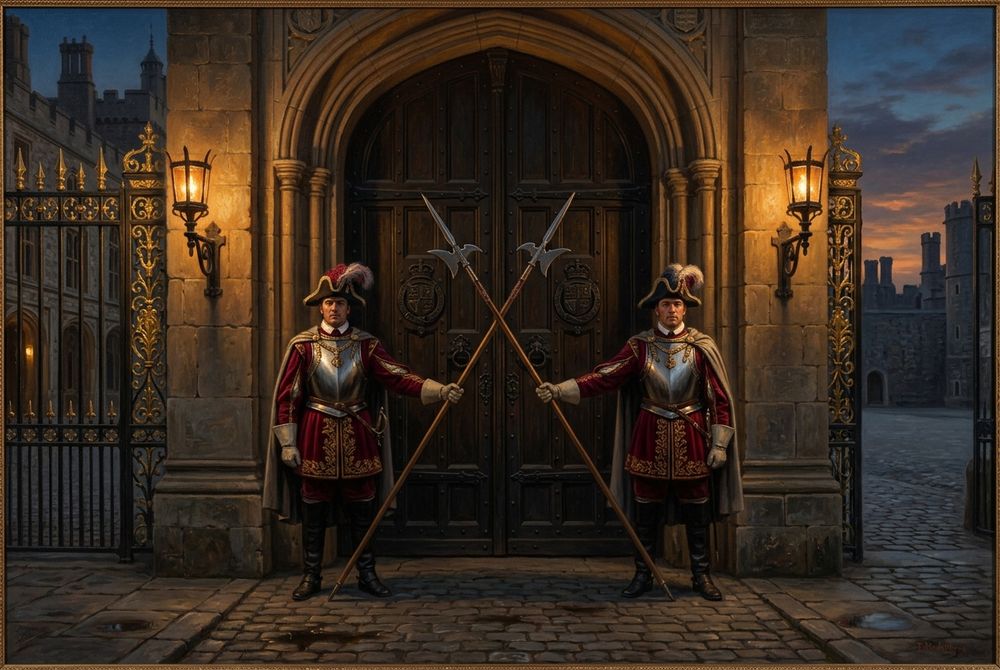
Crossed halberds at the palace gate. The guards tell you two things at once: the king is in residence, and you may not pass. Both messages are Genesis 3:24 in one picture.
Where cherubim stand
The cherubim keep the way, and that verb is shamar, the same word as Adam’s job in 2:15. The guarding Adam dropped is picked up at the door he left by.
In the tabernacle, cherubim are woven into the veil, the curtain that bars the way into the innermost Presence. Israel’s priests served every day in front of that curtain. Eden’s last scene hung there, stitched in thread.
God is enthroned between the cherubim; they mark the innermost room. Ezekiel can even describe the king of Tyre in cherub-language, in Eden’s own vocabulary: an anointed guardian who was set there, and fell. In every case the Bible’s interest is the office. Someone keeps the way into the Presence.
Where the guarded way opens
Israel wove the guards into the veil, so cherubim barred the way in, in fabric, every day, at the sanctuary door (Exodus 26:31, above). For centuries, no one walked past them.
The veil tore from the top, the one direction no man could reach, and the guarded way opened. Hebrews names what came through the tear: a new and living way, through the veil, through Christ himself (see also the last Adam).
The guards stand watch in the dusk sky, above the serpent they were posted against.
Open this scene’s sky →Cherubim are a high order of angels, and Genesis 3:24 records God stationing them to keep fallen humanity from the tree of life.
Cherubim are the guardians of sacred space, posted wherever God's Presence meets a barred way, so Genesis 3:24 marks Eden as a sanctuary, now barred.
The Bible leaves open what cherubim are: angels, symbols, throne-carriers. This page leaves it open too. In Ezekiel’s visions they carry the moving throne itself, with no barred way in sight, so guarding is not the whole of their work. Ezekiel 28’s king-as-cherub is a disputed passage; this page uses it for its Eden vocabulary, not as a system. What the texts agree on is the function: cherubim stand where God’s Presence meets a barred way. That function is this page’s whole claim.