Coats of skins כָּתְנוֹת עוֹר
Mercy, inside the sentence
Between the verdict and the expulsion sits one verse of pure kindness. God makes the man and his wife coats of skins, and clothes them. Their own fig-leaf effort is replaced by a covering God makes and God puts on. In Scripture, covering someone’s nakedness is a loaded act, and the verses below show what it carries.
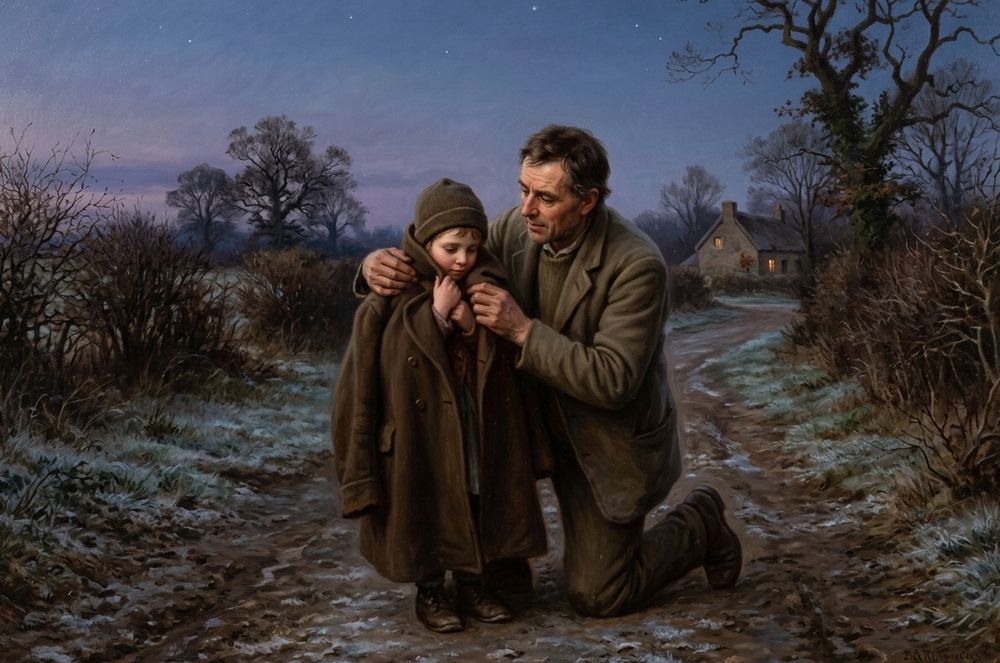
Cold road, long walk home, and the father takes off his own coat and puts it on the child. The child did nothing to earn it and could not have made it. Genesis 3:21 is the same picture: covering as mercy, made and given by the one who was wronged.
What covering means
Ezekiel 16 is God’s own telling of how he took Israel to himself. There, covering her nakedness and entering covenant come in one motion.
Covering runs through the Bible as the shape of mercy: sons covering a father’s shame, God covering sin itself. At the far end of the book, the redeemed are “arrayed in fine linen, clean and white” (Revelation 19:8), dressed once more by God.
The coats glow warm in the dusk sky, the scene’s one star of pure mercy.
Open this scene’s sky →God replaced the fig leaves with animal skins, so an animal died to cover sin, and Genesis 3:21 is the first picture of atonement.
Covering the nakedness of the ashamed is a covenant gesture in Scripture, so Genesis 3:21 is mercy dressed onto exiles God refused to abandon.
The trail on this page follows an act, not a single word. Genesis 3:21 says God clothed them (labash), while the covering-texts use kasah: the same gesture, in two different words. Covering is also not a flat code-word for covenant. The unashamed couple of Genesis 2:25 were naked and in full fellowship, so the link only runs one way. When God covers the ashamed, covenant-shaped mercy is in motion. The old thought that the skins required a death, the first sacrifice, is an inference the text never states. It may be right. This page treats it as an inference, not a verse.