Shabat שָׁבַת
A cluster of endings
Genesis 2 opens with a cluster: the work finished, God rests, blesses, makes holy. Something is missing, too. Six times Genesis 1 closes a day with “the evening and the morning were…” Day seven never gets that line. (The open rest page walks through what that silence means.) This site keeps running one test: where else in the books of Moses does that exact cluster appear? Once, at the finishing of the tabernacle. Solomon’s temple echoes it a third time, in 1 Kings 8. The two passages sit side by side below, the creation on the left and the tent on the right.
Finished, looked upon, blessed, sanctified. The four-beat ending comes twice in the books of Moses: at the creation, and at the sanctuary. And the tabernacle’s ending ends like this:
The work is finished, and God moves in. The finishing was always for the moving in.
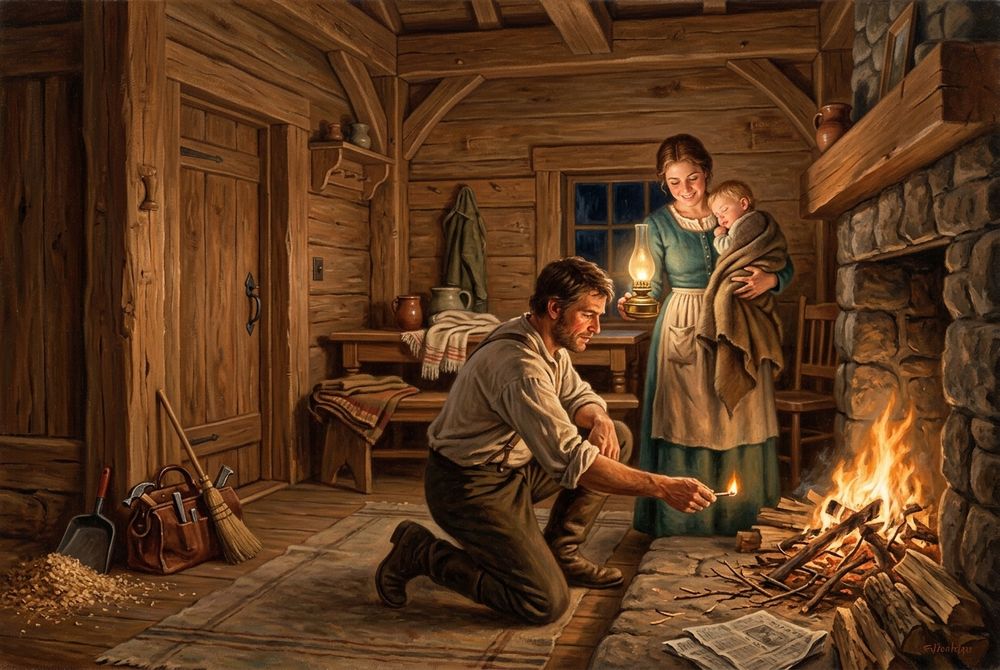
The builder doesn’t finish a house and walk away. He lights the first fire. Rest here is residence, not a nap.
What rest means when God does it
God’s rest is his dwelling; the psalm says both in one breath. The seventh day is the King taking up residence in the house the six days built. Exodus 20:11 even says it with a second word. There God “rested” the seventh day with nuach, the settling-down word. Cease, then settle in.
Jesus, challenged on a sabbath, says the Father is still working. So whatever the seventh day’s rest is, it was not a finished nap in the ancient past. Hebrews 4 says God’s people were still being invited into it. The seventh day is where the whole story is headed.
Day 7’s three stars (rest, finished, blessed) stand at the top of the sky’s eastern edge.
Open the heavens →God finished creating the physical universe in six days and rested on the seventh, and that rest is the model for the weekly sabbath.
God ceased (shabat) as a builder stops when the house is done; the seventh day is his moving into what the six days built.
Kalah, “finish,” is an everyday verb; Rebekah finishes drawing water with it. This is a pattern argument, not a magic-word argument. What carries the weight is the full four-beat sequence, finished, inspected, blessed, sanctified, arriving whole in the Law’s two great endings. (The tabernacle’s “sanctify” beat is Exodus 40:9, where the whole tent is anointed and made holy.) We read that as the author’s signature. Judge for yourself, with both texts open.