Qadash קָדַשׁ
Start with something you already know
A lot of houses have a shelf of dishes nobody eats off, usually a grandmother’s plates. Test them in a lab and they are the same clay as the plates in the sink, sometimes from the same factory. Nothing about them is stronger or purer. They are different for one reason only: somebody decided they are for something. That decision is the whole difference.
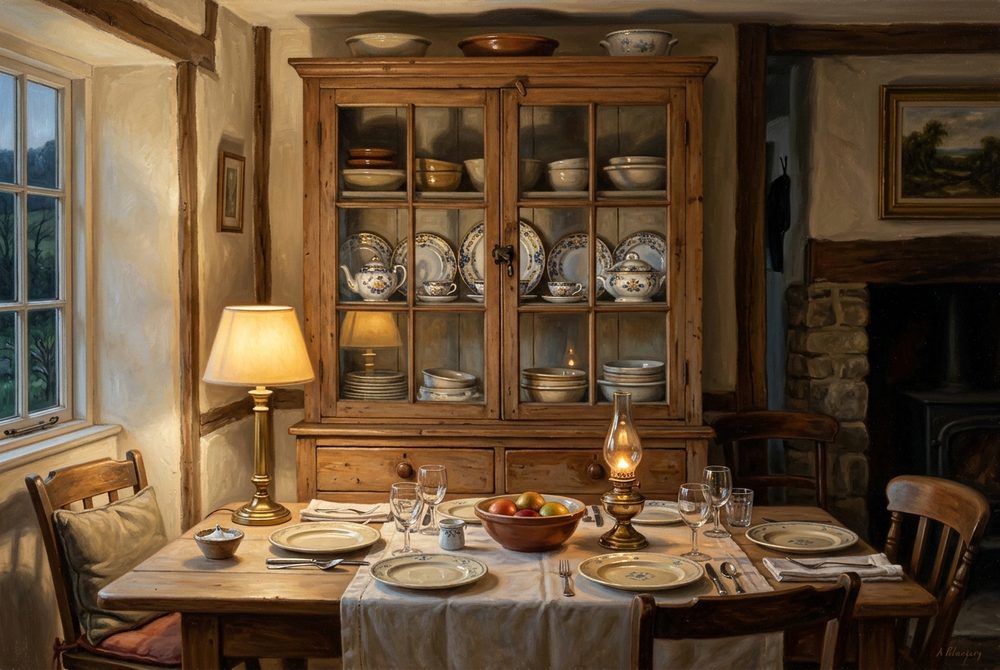
Same clay as the Tuesday dishes, reserved for something. Holiness in the Bible starts here, not with better material but with being set aside for God and for a purpose.
Qadash works the same way. It is not a word about how good a thing is. It is a word about a change of status: ordinary, then reserved. That makes the Bible’s first use of it surprising.
The first holy thing in the Bible is a day
The first holy thing is not a mountain, a building, or a priest. It is a day. And this is the only time qadash appears in the entire book of Genesis. One occurrence in fifty chapters, and it goes to a unit of time.
Then the word goes somewhere specific. Across the Old Testament it turns up around 173 times, and the books that carry it are the ones about worship: Leviticus, Exodus, Chronicles, Ezekiel. Its subjects are the tabernacle, the priesthood, and the sabbath. So the word makes one appearance in the creation story and then reports for duty at the tent.
The set-apart day, handed to a people
Four English words, one Hebrew word: to keep it holy is qadash again. At Sinai the day God set apart is handed over to a nation to keep. What God did once, Israel now does weekly. A few chapters later God says why he gave them the day at all: so they would know who is doing the setting apart.
The day is set apart so the people will know they are the ones being set apart. The verb has moved from the calendar to the congregation.
Where the word lives the rest of its life
Finish the tent, then sanctify it. Genesis 2 uses the same two-beat order: the work finished, then the seventh day made holy. The full side-by-side comparison is laid out on shabat. Two related words belong here too. Hivdil, “to divide,” is the verb that separates one thing from another so that something can be holy. Dividing is how setting apart gets done. And miqdash, “sanctuary,” is built on this very root: a miqdash is literally a set-apart place. They are one family. One is the day; the other is the room.
The set-apart One sets apart a people
Jesus prays this the night before he dies. He is speaking Greek in John’s Gospel, not Hebrew, but it is the same idea, and it is the last stop on the line. First a day is set apart. Then a tent, then a people. Then one man sets himself apart, so that the people can be. The heirloom is no longer on a shelf; he is handing himself over.
Day 7’s stars (rested, blessed, sanctified) are the last three lit in the Genesis 1 sky.
Open the heavens →"Sanctified" means God marked the seventh day as holy when six days of making the world were done, the pattern for the weekly Sabbath.
"Sanctified" (qadash) is the tabernacle's dedication verb, used once in Genesis and then almost only for tent, priests, and sabbath: day seven is a dedication.
By itself, qadash settles nothing about what Genesis 1 is for. It is an ordinary and very common Bible word. Fields, garments, firstborn animals, and whole armies get sanctified with it, and plenty of those uses have nothing to do with covenant history. The small, checkable thing this page points at is not the word’s meaning but what gets sanctified first. It is a unit of time, before any shrine, any altar, any priest, in the only verse in Genesis that uses the word at all. Draw from that what you think it will bear. Someone can agree with every line above and still read Genesis 1 as physical creation. The argument this site makes needs the sanctuary evidence alongside it, not this verb alone. One more limit: a word appearing once is a small sample, and arguments from where a word clusters are suggestive, not decisive.