Eastward מִקֶּדֶם
A garden with a direction
Genesis bothers to tell us which way Eden faces: God plants the garden eastward. When the man is driven out, the guards are posted at the east. That is the side you leave by, and the side you would come back by. It seems an odd detail, until you know another house in this book with a guarded east door.
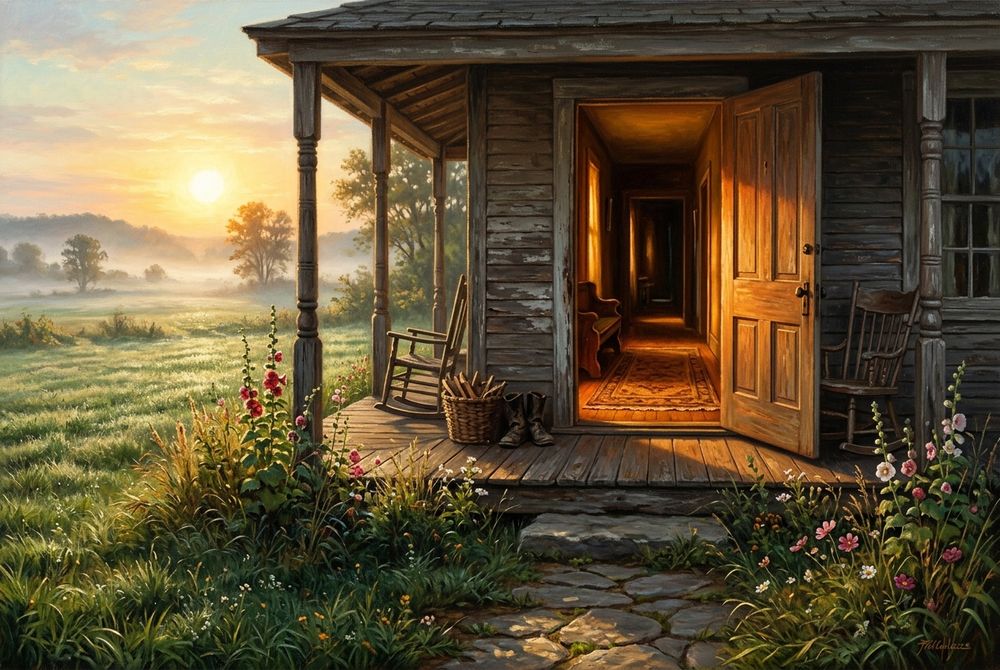
Nearly every house has one door that is THE door. Everyone who ever comes in, comes in by it. You know a place by which way it faces, and Eden faces east.
The east side, through the Bible
The tabernacle’s one entrance faces east, and its keepers camp there, guarding the way in on pain of death. It is the arrangement Genesis 3:24 just set up: guards, east side, a way kept.
Exile keeps moving east. Adam goes out the east side, and Cain goes further east still. When Ezekiel sees God’s glory come home to his temple, it comes in from the east, through the door the story left by.
When the glory walked out east
The glory rises off the threshold first. It does not vanish; it moves.
The glory leaves the house by the east gate.
It pauses on the mountain east of the city.
Centuries later, that same east gate is where the glory is promised to come home.
Jesus says “your house is left unto you desolate” (Matthew 23:38) and walks out of the temple. Then he sits down on the mount of Olives, east of the city, and weeps over it (Luke 19:41). Set beside Ezekiel 10–11, that looks like the glory leaving by the east way again. Ezekiel had also promised the glory would come home through that same east gate (43:4). The pattern is laid out here; the weighing is yours. This is the exile-from-the-sanctuary thread again: driven out eastward, glory walking out east, glory coming home from the east. The dust page follows the same thread from the other end.
Eastward stands at the sunrise sky’s edge, where this sky’s own light is rising.
Open this scene’s sky →"Eastward" is a note on the map: the garden lay in the eastern part of Eden, and the detail locates it, like the four rivers.
"Eastward" is the direction a sanctuary faces, the one guarded door the tabernacle and temple have, so Eden's east side marks it as God's house.
East is often just a direction. In Genesis 2:8, some old translations even read miqqedem as “of old” rather than “eastward.” Not every compass point is theology. The pattern here is specific: the sanctuary’s single east entrance, guarded; expulsion eastward; return from the east. Three books keep that arrangement. Ezekiel never names the mount of Olives; “the mountain on the east side of the city” is a location the reader supplies from a map. Matthew never cites Ezekiel. This is a pattern shown, not a proof-text claimed.