Itstsabon עִצָּבוֹן
One word for two vocations
Genesis never says “cursed art thou” to the man or the woman. It says “cursed is the ground for thy sake.” The serpent is cursed, and the ground is cursed. The man and woman receive something else: itstsabon, hard, grinding toil, laid over their two callings, bearing life and working the ground.
Her sorrow and his sorrow are the same Hebrew word. That makes them one broken condition, shared, rather than two separate punishments.
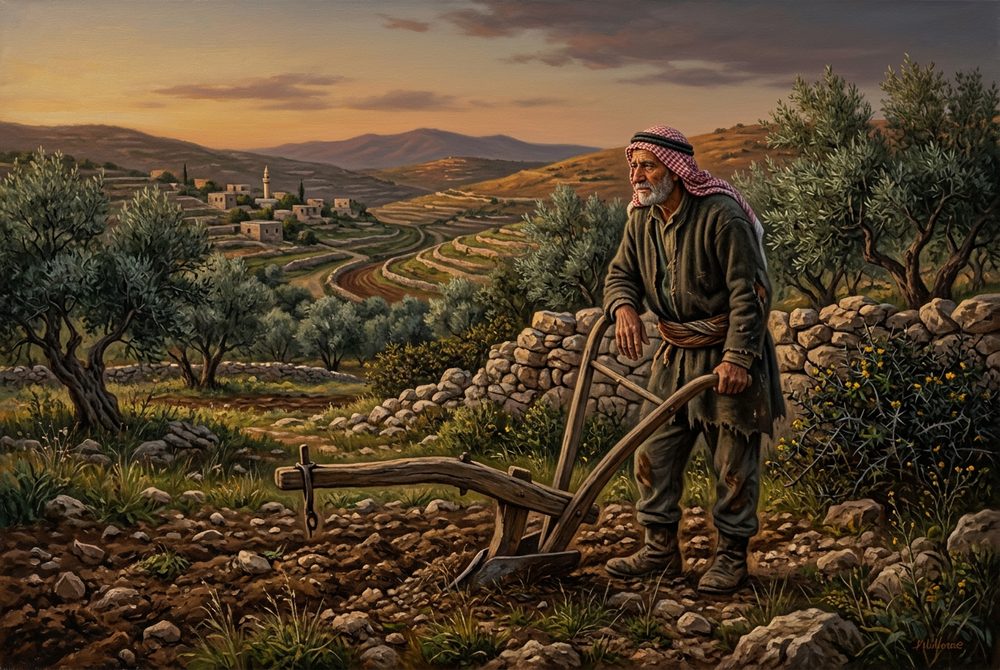
A farmer at dusk, leaning on the plow, the field half-broken, thorns along the wall. The work still works. It just fights back now.
The third use, and the hope inside it
Itstsabon appears exactly three times in Scripture, and all three are in Genesis. The third time, it turns toward hope.
Lamech names his son “Comfort,” aimed straight at this word. Even in the Bible’s first pages, someone is already hoping God means to lift the sorrow.
A labor the New Testament keeps borrowing
Genesis 3:16 ties this word to one image on purpose: bringing forth children. Centuries later, in Greek, the New Testament keeps returning to that same image, for something being born that isn’t a baby.
Jesus uses the picture for his own leaving and return: sorrow first, then a joy the sorrow doesn’t get to keep. Paul uses it for a church still forming:
Paul is in labor over a church not yet formed. Creation itself groans like a woman near her time. A woman cries out in birth-pains at the center of Revelation’s own vision. None of these is the Hebrew word on this page; itstsabon never left Genesis. But the New Testament keeps coming back to the picture Genesis drew first: something good, arriving through real pain.
The sorrow finally lifted
The voice that promised rest to the heavy-laden is the same voice at the end of the book: no more sorrow. Lamech’s hope, aimed at this word, is finally answered.
Itstsabon glows heavy and low in the dusk sky, the sorrow the whole book is working to lift.
Open this scene’s sky →"Sorrow" is the curse laid on the woman and the man for their sin: pain in childbirth, painful labor, and a creation fallen with them.
"Sorrow" (itstsabon) is the hardship of a cursed ground, felt in two callings, so neither the man nor the woman is cursed in person.
Three occurrences is a small set. Small sets make sharp observations, not sweeping doctrines. The King James word “sorrow” flattens this word a little; it names grinding toil more than sadness. Revelation 21:4’s “sorrow,” along with the travail language of John 16:21, Galatians 4:19, Romans 8:22, and Revelation 12:2, are Greek words, not this Hebrew one. The connection is the shape of the promise, not a dictionary link.