Raqia רָקִיעַ
The word is a workshop word
Start with the verb the noun is built on. Raqa means to hammer something out, to beat it thin, to spread it flat. You hear it clearest where somebody is standing at a workbench.
That is the tabernacle workshop. Gold is hammered thin, cut into thread, and woven into the priest’s garment. The colours are the tent’s own: blue, purple, and scarlet. The verb turns up again when censers are pounded flat into plates to cover the altar (Numbers 16:39). Wherever this word goes, a craftsman is working metal.
Then Elihu uses it of the sky.
Strong, poured, and polished, like a metal mirror. The sky is being described as a worked surface, something made the way a smith makes. So the noun day two uses is not a word for empty air. It is a word for a thing beaten out and spread. (The same verb can spread the earth out over the waters too, in Psalm 136:6. It is a verb about spreading, not only about skies.)
What day two builds
Day one drew a line, and day two builds one. The house gets its ceiling.
That dividing verb is the one that builds holy places all through the Bible (see hivdil). Here it makes an upstairs and a downstairs out of one world.
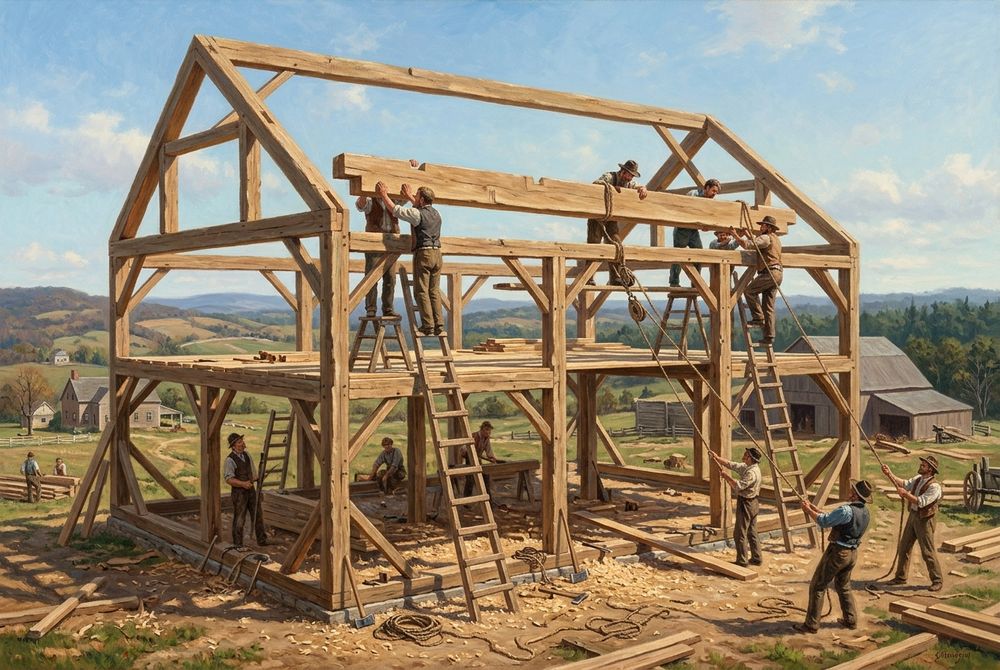
The day the great beam goes up is the day the building gains an upstairs and a downstairs. One structure, two spaces. A raqia makes the same thing: a house with a place above and a place below.
When the rest of the Bible talks about that ceiling, it very often describes cloth.
That word for “curtain” is the word for the tabernacle’s own ten curtains (Exodus 26:1). And Isaiah finishes the picture.
A tent is not scenery. A tent is where somebody lives. God spreads the sky out “to dwell in.” Hammered metal, then woven cloth: two pictures, one idea. The sky is being described in the vocabulary of a sanctuary (see miqdash).
The throne room, seen from below
One prophet saw a raqia up close, and he tells us where it sits.
Ezekiel’s verb is the tent verb. The crystal is stretched forth over their heads, the same word Psalm 104 and Isaiah 40 use for pitching a tent. Those two verses describe a room. The living creatures are underneath. The clear surface is over their heads. The throne stands on top of it.
So the firmament is a floor. From below it looks like a ceiling. From above it is pavement.
Which is what the elders saw on the mountain.
They looked up into it and saw stone the colour of the sky, the same blue stone Ezekiel names under the throne. Exodus does not use the word raqia here. It doesn’t have to. It is showing the same picture from the same angle: the floor of God’s room, seen from underneath.
If that is what a raqia is, then day two is doing more than weather. It lays the floor of the throne room over the world’s head. And the creatures under that floor in Ezekiel’s vision are named later in the same book: “and I knew that they were the cherubims” (Ezekiel 10:20). The guards posted at the garden gate are the ones standing under this floor (see cherubim).
GO DEEPER: THE WORKER'S HAND
A worked surface shows the worker
Handiwork is the point of a hammered thing: you can see the hand in it. The raqia is not only a lid on the world. It is a display.
The Bible’s last book keeps the same furniture in the room.
A clear floor before the throne, and living creatures around it. John is not doing astronomy either. He is describing a room, and it is a room we have seen.
One last thread, held up rather than pulled. Daniel says the wise “shall shine as the brightness of the firmament,” and those who turn many to righteousness shine “as the stars for ever and ever.” If the firmament is the floor of God’s room, then the people set apart are its lights. What that verse settles, and when, is a real question, left open here and at the end of hivdil. The day-two cluster waits in the heavens.
"Firmament" is the expanse of sky God made on the second day, the space that holds the clouds above and the seas below.
"Firmament" (raqia) is a worked surface, hammered and spread like a tent, and Scripture's visions place it as the floor of God's throne room.
Readers argue hard about what ancient people thought the sky was physically made of, and that argument is not easy. The word-picture really is a solid-sounding one: something hammered out and spread, “strong, and as a molten looking glass.” This page does no astronomy with it. The sky over your head is really there, and day two is not denying it. What this page tracks is what the word does in Scripture’s own visions (floor, tent, handiwork). The material questions stay where what we affirm puts them.
Four more limits. Job 37:18 is Elihu speaking, and it is poetry. Exodus 24 and Revelation 4 do not use the word raqia at all. They are shown as echoes of one picture, not as occurrences of one word. “The throne room, seen from below” is this site’s summary, not a phrase Scripture uses. Ezekiel’s vision holds far more than this page explains; this page takes one piece of furniture out of a room full of them. Weigh the pattern when you reach the seventh day, where the house is finished and its Owner rests.